
When Tribute Becomes Art
When the past speaks to the present, and the present answers, an act of tribute becomes art in and of itself.


When the past speaks to the present, and the present answers, an act of tribute becomes art in and of itself.
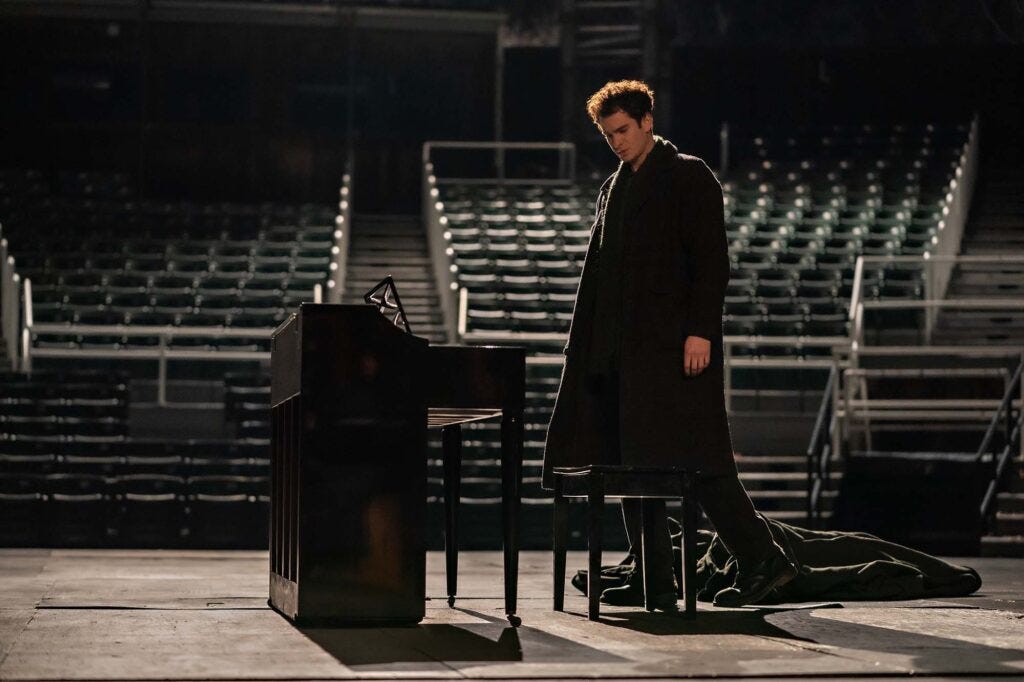
Loving Vincent was a refreshing piece of media. The entire movie is essentially a series of paintings, painted in Van Gogh’s signature style; it’s such an intimate and fitting tribute to the life of one of the greatest artists the world has ever known. Tick Tick…Boom is three hours of getting to know an artist who died before he saw his work being hailed as art. The Avicii Tribute Concert is an elegant and timeless tribute to an artist who redefined a genre.
Art is rarely born in isolation. It’s a perpetual dialogue across time and medium, teetering at that sweet intersection of influence and inspiration. And I feel that this practice of creating ‘Tribute Art’ — art that is created in the same medium or stylistic form that the artist was known for — is an intimate and deliberate extension of their ingenuity, something that allows us and time to carry their presence forward. Tribute art tells us that art isn’t just something to be preserved but something that is deliberately made alive, passed down, transformed and subject to newer interpretations.
Philosopher Walter Benjamin once argued that the “aura” of art, the authenticity tied to its unique presence, is undermined by mechanical reproduction, suggesting that while mass reproduction can democratise access to art, it also diminishes its aura, transforming the experience and potentially its meaning. But I believe a reinterpretation, or reproduction via modern means, especially in popular media, opens up further discourse, reviving interests and justifying the existence of art as a social incentive that brings people together.
Theorist Linda Hutcheon calls adaptation and tribute “repetition with difference”, highlighting how these acts are not mere copies but creative reinterpretations, which one could say is the point of art. This iteration is how culture grows, showing that art is a cumulative, collaborative and ever-growing space. Tribute art tears down the obsession with “originality” that often dominates art discourse, embracing instead the messy, beautiful reality that all culture is iterative and art is subjective.
Take Loving Vincent, a project that took 6 years to be completed, which blends 19th-century expressionism with modern animation. And by doing so, it sparks fresh dialogue about mental anguish, creativity, and legacy.
It’s essential to mention that grief lurks at the heart of many of these tributes, fuelling some of the most haunting and poignant creative responses. The death of an artist often crystallises their importance, inspiring others to respond through art. Tribute art provides art an avenue to undergo a constant process of reappropriation, where artists rework the past to speak to the present explicitly, forcing us to deal with how meaning potentially morphs and evolves.
It channels this raw mourning into creation, as seen in the Avicii Tribute Concert or Tick Tick…Boom. It transmutes absence into presence, and recognising it as creative evolution means accepting that culture itself is fluid—a web woven from countless threads of loss, memory, and innovation.
While all stories inevitably end, tribute art insists on continuity; it refuses to let brilliance fade into silence. In this way, it becomes a cultural revolt, an artistic resurrection that fights to preserve the creative spirit against the relentless decay of time. I suppose the idea of a tribute is our way of saying thank you, and by expressing it via artistic means, it serves as a promise that creativity, once sparked, can never really grow old.
References:
https://journal.lib.uoguelph.ca/index.php/sofammj/article/view/2655/3015
https://en.wikipedia.org/wiki/The_Work_of_Art_in_the_Age_of_Mechanical_Reproduction
[Featured image: Still from Loving Vincent (2017), directed by Dorota Kobiela and Hugh Welchman]